Operationalizing Trace-Driven Improvement Cadences for Production Agent Teams
Teams improve production agents by treating traces as structured inputs to a diagnostic cadence.
Production agent teams turn observability into compounding improvement by treating traces as inputs to a structured engineering cadence. That cadence needs defined triggers, attribution to the harness layer where a failure began, and replay validation before a change ships. Each diagnosed failure then becomes a regression case, so production evidence improves prompts and logic without allowing previously resolved failures to return unnoticed.
Why standard observability leaves production agent teams flying blind
An agent can return HTTP 200 within its latency budget while hallucinating a line item, following a stale policy, or routing to the wrong sub-agent. Status codes, latency, and token counts cannot show whether the agent used the right evidence or passed enough context to its next step. In a multi-stage workflow, an early decision error can propagate through otherwise valid retrievals, tool calls, and handoffs.
TelemetrySuffBench’s 2026 analysis makes that gap concrete. Those results show why teams that base their incident response on terminal symptoms lack the evidence they need to know what to fix. Catching a failure is not the same as knowing what to fix.
What a trace must contain to support root cause attribution
Reliable attribution requires decision content and its provenance. A trace must connect an action to the inputs, retrieved evidence, tool outputs, and intermediate reasoning that produced it. TelemetrySuffBench finds that origin-step accuracy falls to zero for every model tested when decision content is removed, and that removing provenance causes large losses whose size depends on the model. Recording the final response without its supporting context therefore leaves a decisive gap. The reviewer can identify an incorrect answer without knowing whether retrieval, a tool contract, or the prompt caused it.
Wang et al. describe execution provenance as a graph connecting retrieved passages, tool outputs, memory items, environment observations, intermediate claims, and final answers. Each node is traceable to the execution step that produced it. A span hierarchy gives that graph an execution structure. A root span covers the workflow, while agent, LLM, tool, and retriever spans cover individual processing stages, model calls, external invocations, and knowledge-base queries. Embedding and chain spans cover other operations, with inputs and outputs recorded so that a reviewer can reconstruct the decision path.
The instrumentation boundary follows from that diagnostic requirement. Teams should instrument every step that could change the answer. Missing a decision point is more costly than recording extra happy-path spans. To control volume, tail-based sampling should retain failed, expensive, and anomalous traces in full while sampling happy-path traces aggressively.
The six harness layers where agent failures actually originate
The harness is the primary unit of improvement because its components are editable without changing model weights. The working attribution map covers six layers, including prompts and instructions, retrieval, tools and their schemas, memory, skills, and workflow and routing logic. Wang et al. identify failures involving retrieval, tool misuse, stale memory, unsafe instructions, inter-agent miscommunication, and invalid intermediate reasoning. A wrong answer alone does not establish a model-weight problem.
Each layer supplies a different causal question. At the prompt layer, ambiguous instructions can misdirect a decision, and per-step errors compound multiplicatively as a workflow grows. At the retrieval layer, evidence tracing distinguishes a failure associated with the retrieved document from one introduced during the model’s rewrite. At the memory layer, stale information can influence later choices. Skills provide reusable routines that externalize procedural expertise, making their contents another target for failure-driven revision. Tools and callable sub-agents remain components separate from skills.
Tool schema drift occurs when the agent follows a contract that the live system has changed, such as a renamed argument on which downstream steps depend. CI-side schema snapshots and diffs can expose breaking changes before production does. Workflow loops are visible within a trace tree as repeated calls to the same tool with nearly the same arguments, so the harness can exit with a diagnostic. Routing failures also include incomplete or irrelevant inter-agent handoffs, where the receiving agent produces a confident but wrong response without throwing an error.
Why detecting a failure and locating its origin are different engineering problems
Terminal status provides evidence about an outcome. A downstream step may work as it should even when its input is wrong. If that input originated in an earlier retrieval, memory lookup, or handoff, repairing the visible symptom leaves the causal event intact. Attribution therefore needs more than a chronological list of operations. It needs links showing which evidence and decisions influenced subsequent actions.
TelemetrySuffBench separates failure detection, fault-origin localization, and safe abstention under insufficient evidence. Its controlled comparisons show that standard telemetry projections can preserve detection while stripping decision-to-provenance links needed for localization. A longer log of status changes cannot replace the missing relationship between a decision and the information supporting it. Automated diagnosis based on that log may look precise even when the evidence behind it is weak.
Long trajectories make the distinction harder to resolve. TRAJDEBUG illustrates an early constraint-violating decision that cascades through compensating patches, leaving a terminal symptom that is only a downstream effect. It uses multi-granularity history compression and evidence-based error identification to track whether each error was resolved and how it affected the final outcome. That separates errors repaired during execution from harmless errors and those responsible for failure. Locating an error is not enough to establish its causal role.
Multi-agent workflows introduce another attribution boundary at the interaction itself. TRAIL uses annotated agent traces to locate the responsible step, component, or interaction, while MAST identifies specification mismatches, inter-agent miscoordination, weak verification, and cascading errors. Each of these categories needs its own evidence, and a broad claim that an agent reasoned badly gives too little to go on. When the evidence leaves more than one possible origin, the diagnosis must stay unresolved. TelemetrySuffBench finds that evidence gating reduces unsupported unique-origin answers for some models, but two models still answer every ambiguous case, making abstention behavior a necessary evaluation criterion.
How do teams turn real agent failures into a structured improvement cadence?
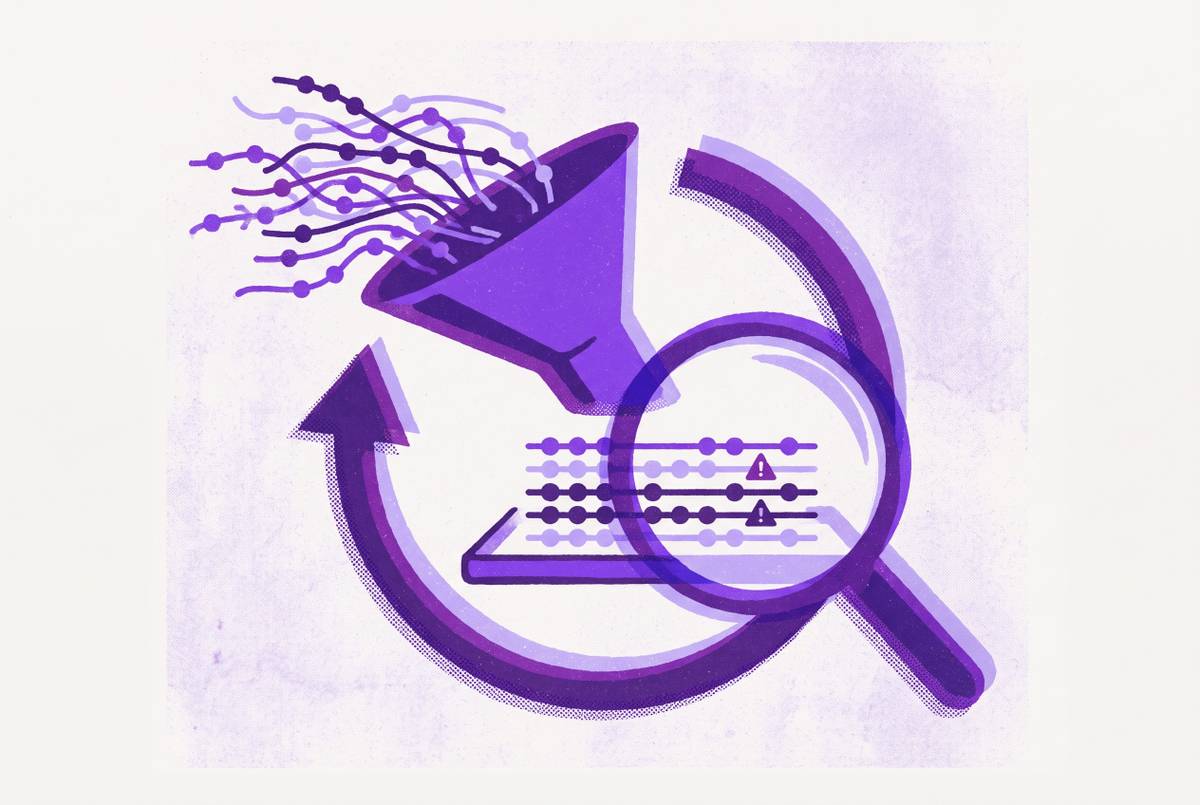
Failing runs, loop detections, step-count regressions, schema-diff alerts, and quality-drift indicators activate the cadence without waiting for a complaint. A failure flag can send a webhook to a triage queue, where a reviewer examines the retained trace. The trigger hands evidence to a diagnostic task. It does not authorize a speculative prompt patch.
The reviewer then attributes the case to a harness layer before writing a fix. The span tree provides the working artifact, moving from input through plan, retrieval, tool arguments, tool output, model rewrite, and final answer. Each span is assessed for the failure signature using decision content and provenance. Raw trajectory inspection by a general-purpose LLM judge is not an adequate substitute for that evidence. Once attribution is supported, the reviewer sanitizes the case, adds an expected-behavior label, and promotes it into the regression layer of the eval dataset.
Prompt and tool schema changes can move on a cadence measured in days, while workflow and memory changes may warrant a weekly cycle, with skill and routing policy changes between those. On the next deployment, CI runs the promoted case with the accumulated regression suite, and no harness change ships without passing that gate. Automation carries the case from failure flag to deploy-time test, so engineers can complete that handoff without reading every production trace by hand.
Replay validation as the gate between a proposed fix and a shipped change
Replay validation tests a proposed change against the recorded execution context, including the retrieval results, tool responses, and environment state from the original failure. Agents are non-deterministic, and their dependencies can change. Without recording or mocking model outputs, retrieval results, tool responses, and relevant external data, a rerun is a new trial. A passing result in that trial does not establish that the proposed fix addressed the original cause.
The sanitized case must preserve the context needed for comparison. That includes the failure’s retrieval result, tool inputs, and model output, with the proposed change tested against the recorded context and graded against the expected-behavior label. The most valuable cases exercise awkward conditions. Weird data, partially broken downstream tools, and behavior near workflow boundaries expose weaknesses that product demos and happy-path evals do not. Those cases come from past incidents and failures that keep happening.
The grading function also needs versioning and stable criteria. Otherwise, a passing score can reflect changed labeling standards. Tests that are often flaky teach engineers to pay less attention to failure signals. REFLECT shows a stronger way to validate a fix: it diagnoses a candidate error step, tests a diagnosis-specific patch through controlled replay, and uses the verified outcome flip as contrastive evidence.
How the cadence accumulates signal rather than resetting after each incident
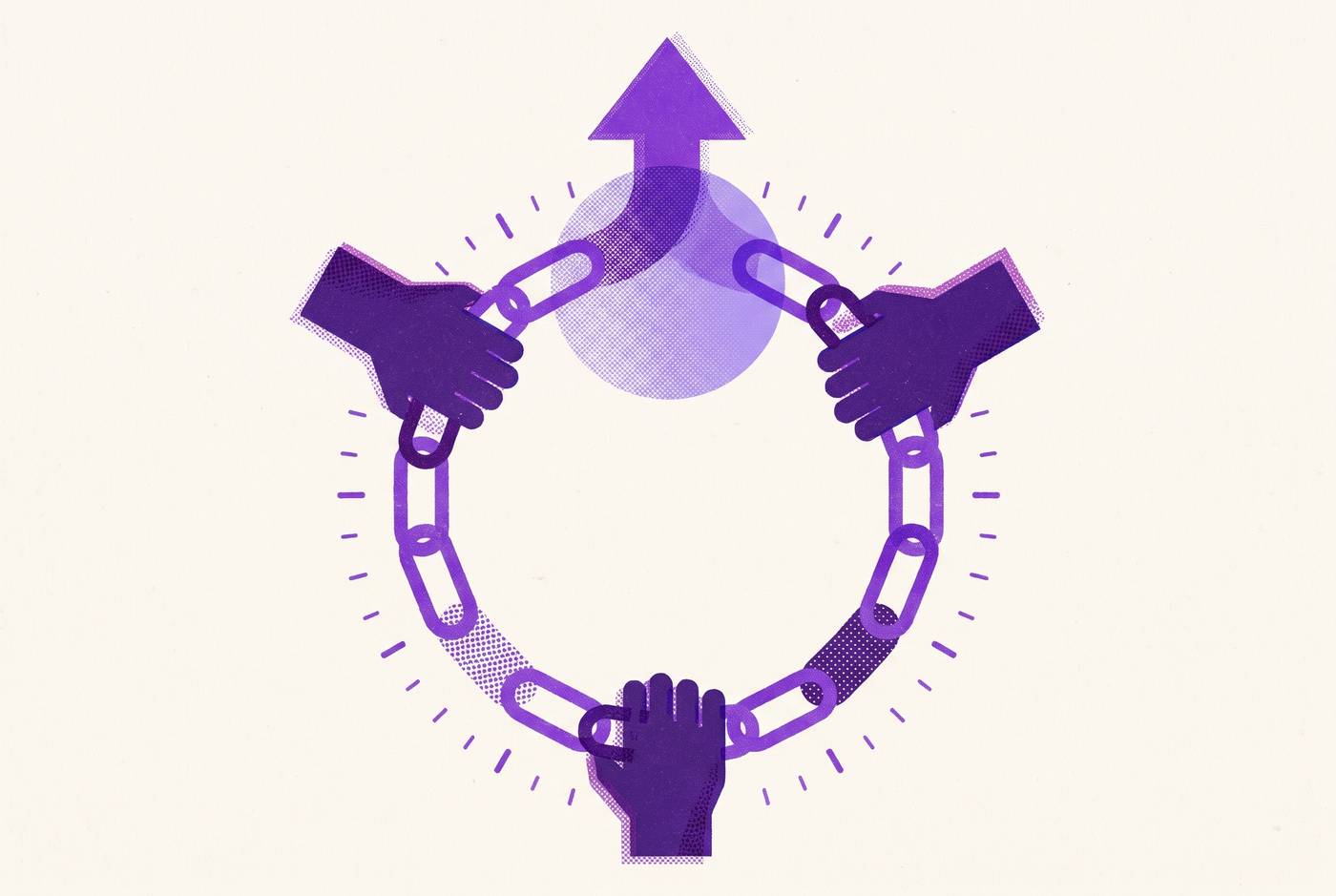
The regression case records both a failure class and the behavior expected in its place, so later changes can be tested against that knowledge. Automation directs attention to failing runs, new failure topics, timeout spikes, and quality drift. Humans can then review the cases that need diagnosis without searching every trace. Tracking which class each case belongs to across cycles then shows whether symptoms that look different share a cause.
That distinction changes the scope of the fix. A malformed request may need a prompt patch, while downstream failures that keep coming from the same retrieved document call for a retrieval configuration change. Repeated loops in one workflow call for workflow redesign. At the skill layer, adding, refining, and composing reusable routines extends the agent’s action repertoire without updating backbone weights. Validated harness improvements can therefore persist across model version changes.
The eval dataset becomes the cadence’s compounding asset. Its value depends on preserving grading criteria and reviewing labeler edits. There is a real counterpressure from complexity, as prompt patches, skill manifests, and regression suites become maintenance burdens. Modular structure, version control, and clear ownership per layer make that burden tractable.
Putting the cadence into operation — where teams should start and what to build toward
Teams should begin with the first promoted failure case. The initial instrumentation work should add decision content and provenance links to spans covering failure-prone steps. Next, explicit failure flags, loop detections, schema diffs, and step-count increases should activate the queue automatically. Someone noticing a problem is not a dependable trigger. While the tooling is still basic, the team should make layer-specific triage its usual response to every case that a trigger flags.
Each triaged case should then enter the regression suite with an expected-behavior label. A small, curated set drawn from incident history is a stronger starting point than a large synthetic set detached from observed failures. Every harness change should be gated on replay against the recorded context. The sequence is deliberate because attribution establishes what to change, and replay establishes whether that change resolves the diagnosed behavior without breaking accumulated cases.
Teams can progress from manual triage to automated failure classification, from hand-curated evals to continuous trace-based promotion, and from per-incident fixes to layer-specific improvement sprints. Before teams make each of these moves, they need evidence they can trust and validation that stays stable. The engineering discipline begins when a real failure becomes a test that the next change must pass.